
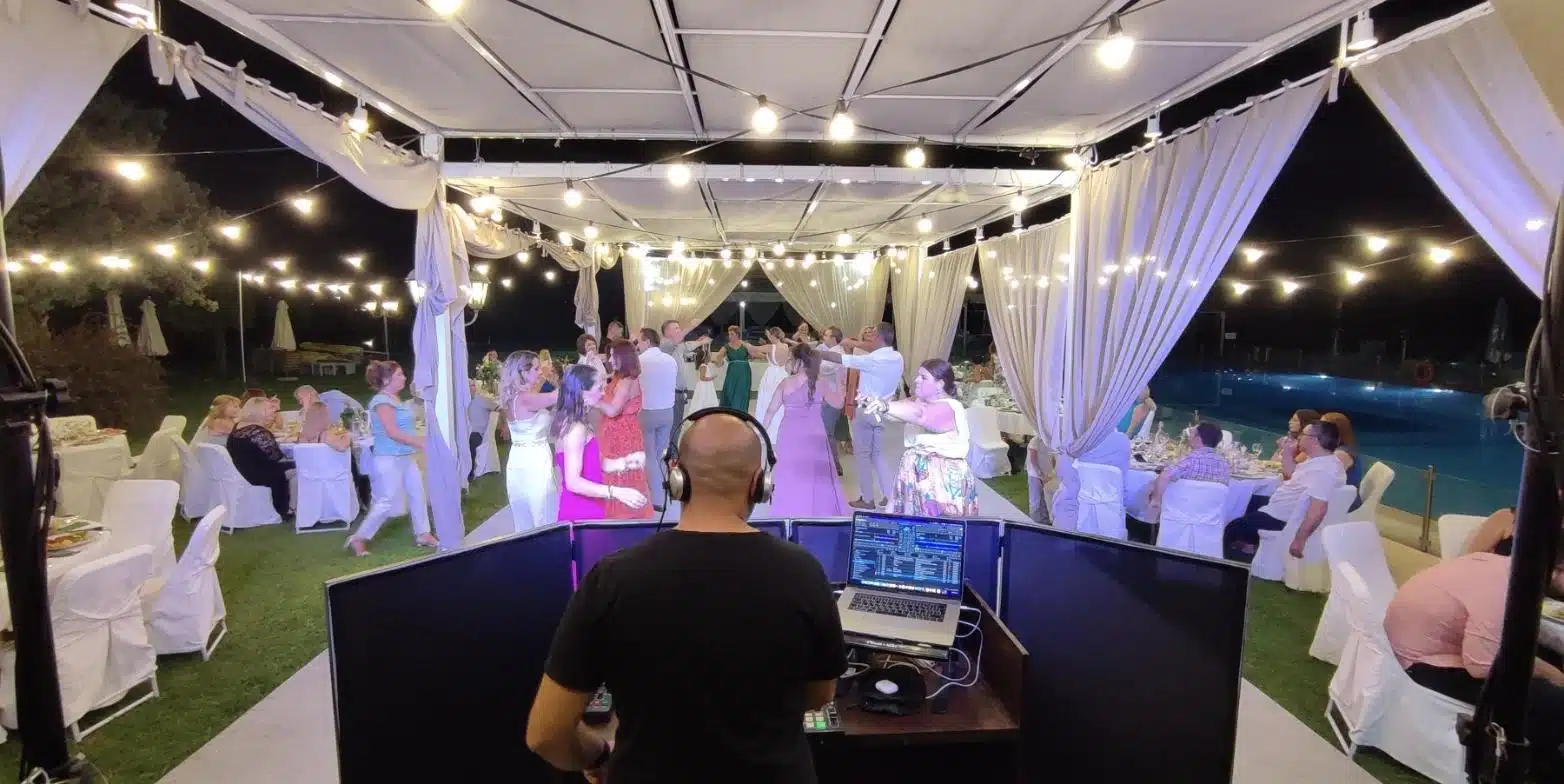
A professional wedding DJ does not stand out because of the music they know, but because of the decisions they make over the course of the evening: when to change style, when to hold on to a track that is working, when to bring the volume down so your guests can talk. Musical knowledge is the prerequisite, not the difference.
The other half of the difference is technical and completely invisible: the sound. A dance floor that never fills up often does not have a repertoire problem — it has a problem with speaker placement, volume or frequencies. Below we look at both, together with what you can ask before you book.
Reading the crowd, not just the playlist
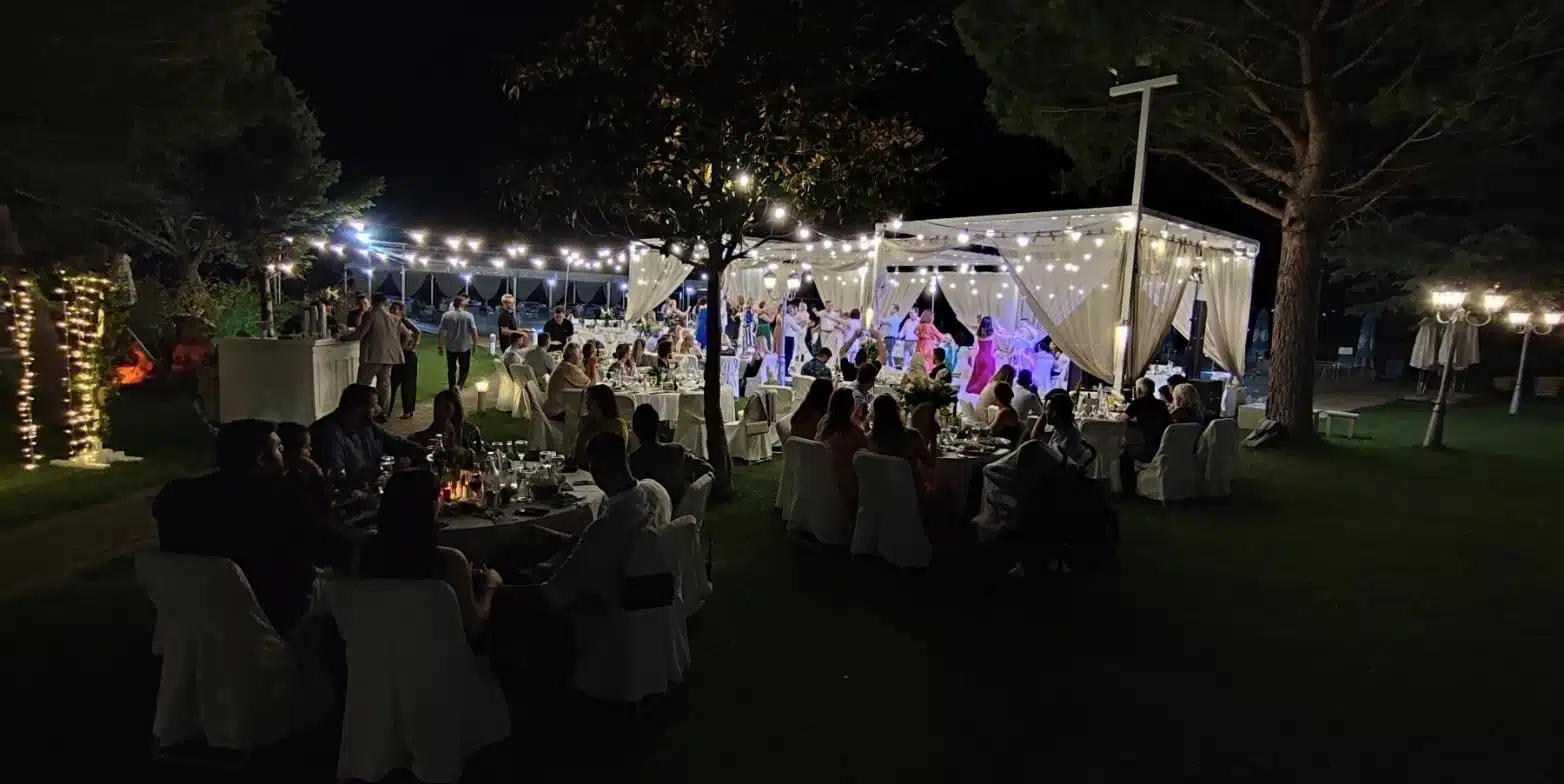
Every wedding has a different mix of guests. A wedding with many older relatives who leave after dinner calls for a different flow than a wedding with eighty friends in their thirties. The same playlist will not work for both, and there is no way to know for certain in advance.
What we do in practice is observe constantly. How many people get up for the first two tracks. How many sit down on the third. If the floor empties at the same point every time we change style, it means the transition is too abrupt — not that the track was wrong.
A practical example: when the dance floor is full, the worst thing you can do is play something new because "it is on the programme". People who are dancing are not asking you for variety — they are asking you not to stop.
What sets a professional wedding DJ apart
The difference shows in the moments nobody notices when they go well:
- The transitions. Between two tracks with different tempos there is always a way to keep the flow from breaking. Without it, every change empties the floor for ten seconds — and ten seconds is long enough for people to sit back down.
- Handling requests. Every wedding brings requests, some of which do not fit the moment. The job is not to say no, but to find where that track fits without breaking the evening.
- Speeches and toasts. The DJ holds the microphone, controls the volume, cuts the music at exactly the right moment and brings it back without a gap. This is where experience shows immediately.
- The backup plan. A second laptop, a second controller, a spare microphone, a second amplifier. Failures happen; what must never happen is for the music to stop.
Sound: the half of the job nobody sees
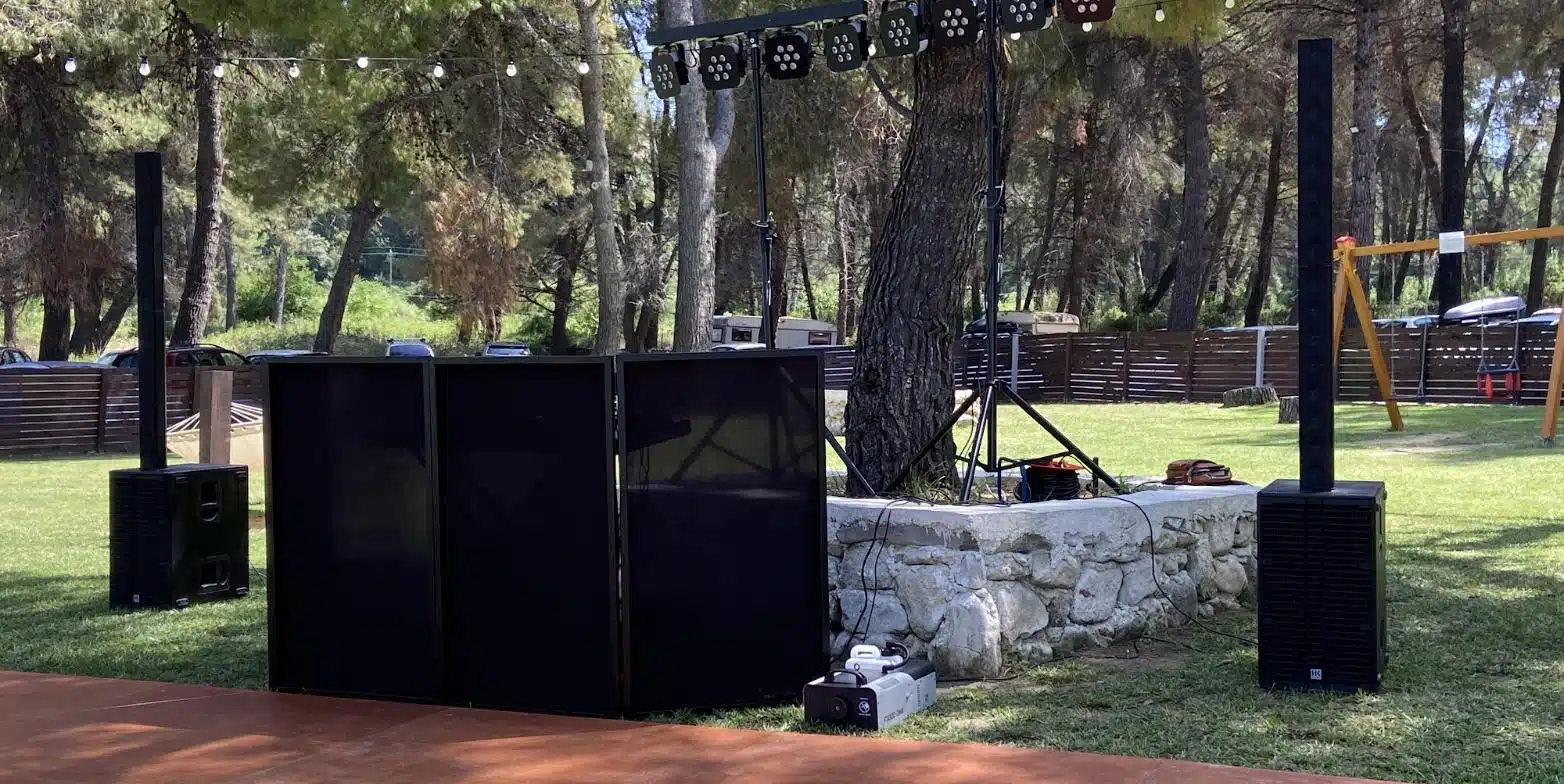
The same equipment gives completely different results in different venues, and the adjustment is made on site.
In a hall with hard surfaces — marble, glass, bare walls — the sound bounces back and blurs into itself. The result is music that sounds loud but indistinct, and guests raising their voices to be heard, which in turn forces us to turn it up even more. The solution is not volume but direction: speakers aimed at people rather than walls, and taming the low-mid frequencies that "muddy" the room.
At a beachfront venue in Halkidiki the problem is exactly the opposite. There is nothing to reflect the sound, so it fades after the first few metres. Wind makes it worse: when it blows away from the guests, the high frequencies are lost first and voices sound muffled, while the bass travels as normal. Turning up the volume does not fix it — it simply annoys the neighbours. What works is more, smaller sound sources placed close to the guests.
One more practical point: outdoors, the temperature drops noticeably after eleven and the sound "sits" differently. A setup that was right at nine usually needs a small correction later on. For details on equipment and the logic behind placement, see our page on wedding sound coverage.
Coordinating with your other vendors
During a reception, the DJ is usually the only person who knows at any given moment what comes next. That is why, in practice, the DJ also acts as coordinator.
The photographer and videographer need a heads-up before the cake and the first dance — if they find out at the same moment as the guests, they will miss the shot. The caterer needs to know when the dance floor opens, because you cannot serve a course while a hundred people are dancing. The venue manager needs to know when the sound stops, which at most outdoor venues is set by the operating licence and not by the mood of the guests.
All of this is agreed beforehand, not during the event. A short run-of-show that everyone has in hand solves most issues.
What to ask before you book
Five questions that give you useful answers:
- Will you personally be at our wedding? At agencies with several teams, the DJ you talk to is not always the one who turns up. Ask for a name.
- Have you worked at this venue before? If not, ask whether they will visit it beforehand. A venue's acoustics cannot be judged from photos.
- What happens if something breaks down? The answer should include specific backup equipment, not reassurances.
- How do we work on the music together? Make sure you understand the process: what you choose, what you leave open, how you communicate your "no" list.
- What time do you arrive and set up? Setting up takes time and should not happen in front of the guests.
Frequently asked questions
How early should we book a DJ?
For a wedding in peak season — May to September, and especially at weekends — the best dates get booked very early. The sooner you lock in your date and venue, the more options you have.
Can we give you our own playlist?
Yes, and it helps. The most useful list, however, is not the one of "must-plays" but the one of "under no circumstances". Five tracks or genres you do not want to hear are worth more than fifty you do.
Do we need a DJ for the ceremony as well?
If the ceremony takes place at the same venue as the reception, it is usually covered by the same setup. If it is at a different location, a separate, smaller rig is needed — mainly for the voice of the priest or officiant and the entrance music.
Does the DJ also play traditional Greek music?
Yes. At most weddings in Northern Greece the evening moves through traditional, laïko (Greek popular music) and contemporary. The goal is for the transitions between them to happen without emptying the dance floor.
Let's talk about your wedding
We cover weddings in Thessaloniki, Halkidiki and across Northern Greece, with DJ, sound system and lighting. See what our wedding DJ in Thessaloniki service includes, or get in touch to discuss your venue and date.